
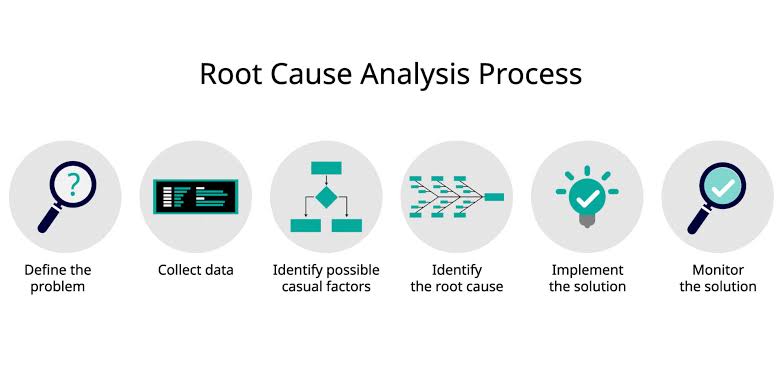
Quality issues with suppliers don’t just happen. If a shipment is rejected, product dimension is not consistent, a component is damaged or a production defect occurs repeatedly, it is likely that there is a deeper cause. The true question is why it failed and how to correct the process that led to the failure.
That’s why modern quality teams are shifting their focus from defect detection to defect prevention. Although it is crucial to find a faulty product, it is equally vital to determine the cause of the defect so that it will not occur again. Supplier quality management can be much more effective when structured with process evaluation, data analysis and corrective action.
Why Root Cause Analysis Matters in Supplier Quality
A supplier could fix a visible defect without fixing the root cause of the problem. For instance, if the components in a batch are found to be defective, they can be replaced but it does not reveal why the components were defective in the first place. This same problem might be present in the subsequent batch.
These weaknesses can be identified through a well structured Manufacturing process audit. Rather than focusing on the final product, auditors assess production processes, equipment settings, operator practices, material controls, inspection processes and process documentation. This offers a good clue as to where the real failure was.
Understanding the Difference Between Symptoms and Root Causes
The first and foremost rule of the RCA is to find out the difference between symptoms and causes. A symptom is a cracked component. Some possible causes may include incorrect machine calibration, improper material, too much process variation, or poor operator training.
Making assumptions can result in ineffective corrective actions. Before determining the cause of a failure, quality teams should gather evidence. Production records, inspection results, machine parameters, maintenance records, employee training records and historical defect data can all be used to help determine the relationship between the problem and the source.
Common Root Cause Analysis Techniques
There are various types of manufacturing situations that need different types of analyses. For simple problems, investigation can be rapid, for recurring problems or problems with high risk, a structured methodology may be required.
- 5 Whys Analysis: Continually asks why a problem occurred until the process weakness becomes more apparent.
- Fishbone Diagram: Structured brainstorming of possible causes in the following categories: materials, machines, methods, people, measurement, environment.
- Pareto Analysis: A technique which allows the identification of the small number of causes that account for a large percentage of defects.
- Failure Mode and Effects Analysis: Evaluates potential failures according to factors such as severity, occurrence, and detectability.
- Process Mapping: Represents every production step to look for points of variation and control failure.
- Data Trend Analysis: Utilizes past quality data to detect any trends or shifts in process performance.
These techniques should not be thought of as stand-alone methods. In complex investigations, the quality professional may use multiple methods to construct a stronger case and to not get too caught up in a single suspected cause too early.
Connecting Audits With Corrective Actions
Defining a root cause is just half the problem. The next step is to create a corrective action that will solve the root cause of the issue. Increasing the final inspection will identify more defects, but not resolve the problem, if a supplier is consistently making components out of specification due to unstable equipment.
It is therefore essential to focus corrective actions on the process itself. This may include equipment calibration, changes to work instructions, employee retraining, material changes, a preventive maintenance schedule, or other process controls. Owners and completion dates should be assigned to each action, with a way to determine effectiveness.
The Role of Data in Supplier Quality Management
Root cause analysis is significantly improved with data. Quality teams can review the measurable evidence from several production cycles, rather than depending solely on interviews or visual observations. This can show if a defect is random or has a pattern.
For instance, the defects might escalate within a specific production shift, after a specific amount of machine operating time or with a specific batch of raw materials. Patterns can be useful indicators. Supplier quality data can also be used over time to help identify weaknesses that may be recurring and not be noticed.
Challenges in Root Cause Investigations
A frequent problem is that there is incomplete or inaccurate information. Investigators may find it difficult to reconstruct what had happened when the defect occurred if production records are not kept properly. Suppliers also may inadvertently only see immediate explanations and not process causes.
One of the other challenges is the implementation of corrective actions in a consistent manner. A supplier can commit to doing something different, but then not keep it up. Hence, follow-up verification is important. Quality teams must ensure that the corrective action was taken and that in practice the production has improved.
Building a Preventive Quality Culture
The best organizations are not afraid to look into risks if they fail again and again. They are able to find potential issues early due to quality information, supplier performance trends and process information. This moves away from quality management to a proactive approach.
This method is also beneficial to suppliers. Clear communication of expectations and sharing of relevant quality information enables suppliers to make process improvements instead of just reacting to specific complaints. This leads to improved supplier partnerships and consistent production over time.
Conclusion
For supplier quality management to be effective, it is not enough to simply detect the faulty products. Businesses must know what to look out for and if the process is stable, and they must be sure that the corrective actions are effective. A structured root cause methodology is used as a starting point to make those improvements measurable and repeatable.
Businesses can have a much better understanding of supplier performance when Supplier Audit findings are linked to a root cause analysis and corrective action system. They can not only document failures, but also pinpoint recurring risks, monitor progress and create more resilient supply chains over time.